6th Conference for Research Software Engineering in Germany, Stuttgart, 03.-05.03.2026
Bernd Flemisch, Inga Ulusoy, March 27, 2026
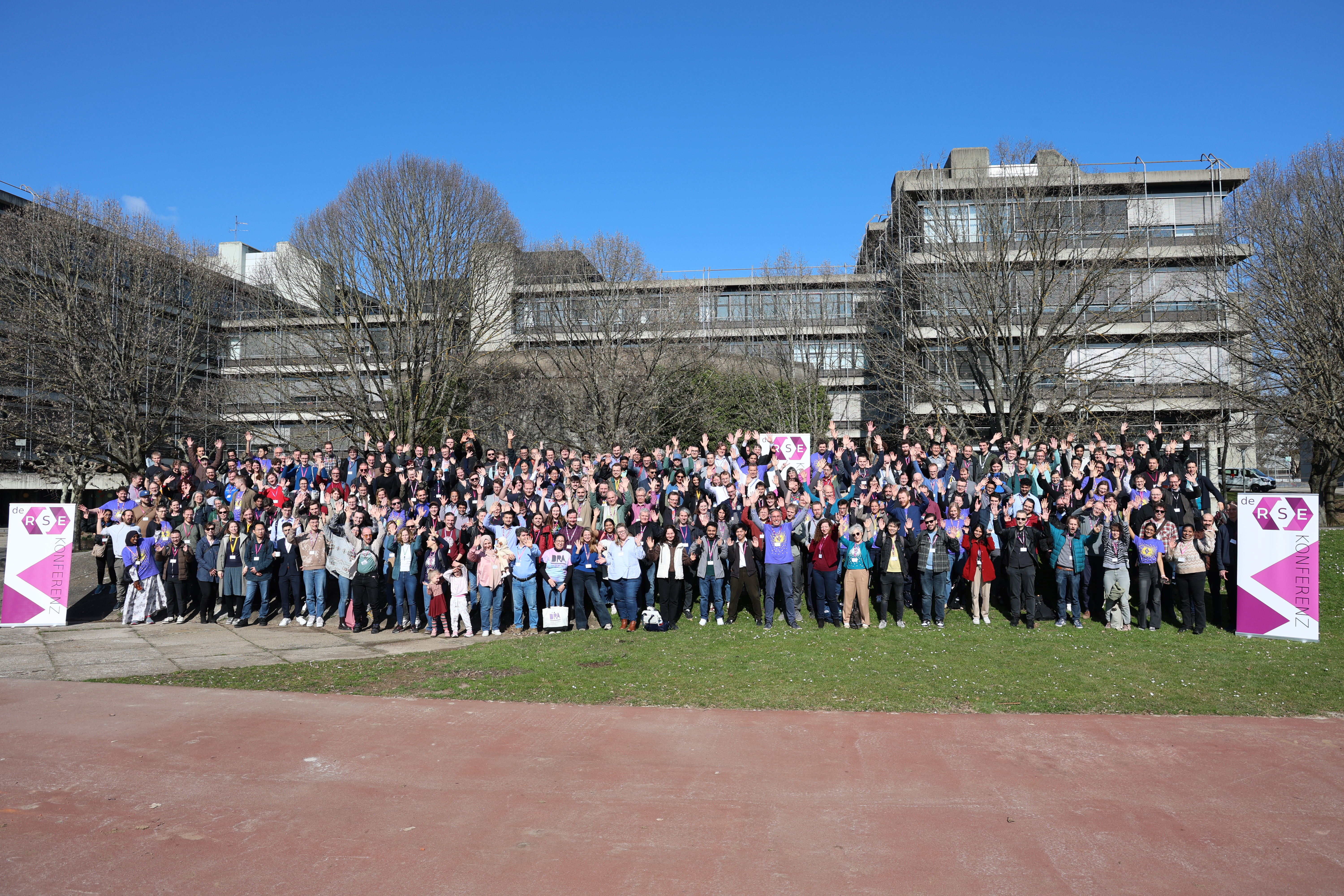
(Picture: By Adam Pagan, CC-BY-4.0 License)
The 6th Conference for Research Software Engineering in Germany, deRSE26,has successfully concluded at the University of Stuttgart. The three-day conference brought together more than 280 participants from universities and research institutions across Germany and beyond. It was preceded by the first Stuttgart Research Software Day.
deRSE26 took place from March 3 to 5, 2026, on the Vaihingen campus of the University of Stuttgart. The event served as a national forum for people who develop, maintain, and use research software in all scientific disciplines.
The program featured around 90 posters and 100 talks, workshops, and interactive sessions in up to five parallel tracks. Contributions covered topics such as research software craftsmanship, emerging computing & infrastructure, Open Science & collaboration, data analysis & AI, community, policy & career development, as well as cross-disciplinary advancements.
Speakers and attendees represented a broad spectrum of domains, including engineering, natural and life sciences, humanities, and social sciences. The conference emphasized openness, community building, and collaboration across disciplines, institutions, genders, and career stages.
Highlights of the conference program included two plenary talks and a podium discussion. In his plenary, Wolfgang Bangerth from Colorado State University addressed the challenges of building reliable, scalable simulation software in complex application domains. He highlighted how systematic software engineering, long-term community development, and open collaboration enable advanced numerical methods to be used and trusted in practice. The talk illustrated how research software can evolve over decades while remaining maintainable and verifiable.
Morane Gruenpeter’s plenary focused on the sustainability and governance of research software in the broader open science ecosystem. She discussed how practices such as clear licensing, persistent identifiers, and structured metadata help make software findable, accessible, interoperable, and reusable. Her talk emphasized that robust policy frameworks and community standards are essential to secure long-term preservation and recognition of research software outputs.
The podium discussion targeted the future structuring of the research software ecosystem in Germany. The panel brought together perspectives from research, infrastructure, and policy to debate recognition, funding models, and career paths for research software engineers. The discussion explored how institutions and funding bodies can better acknowledge software as a primary research result and sparked intensive follow-up conversations among participants throughout the conference.
“The strong attendance at deRSE26 shows that research software engineering has firmly arrived as a core component of modern science,” says Bernd Flemisch, the conference chair. “We see growing recognition for the people, practices, and infrastructures that make reliable, reusable scientific software possible.”
The organizers also announced plans to publish post-conference proceedings. Authors are invited to submit extended versions of their contributions to a dedicated open-access volume in the journal ECEASST after peer review.
deRSE26 continued the series of German research software engineering conferences established by the community-led de-RSE association. The event underlined the importance of national and international networking to advance professional recognition, career paths, and training opportunities for research software engineers.
The organizing committee thanks all contributors, volunteers and local helpers whose efforts made the conference possible and successful. The financial support by the NFDI Consortium NFDI4ING, the Clusters of Excellence SimTech, IntCDC and ctd.qmat, as well as the Collaborative Research Centres ATLAS and SFB 1313 is gratefully acknowledged.
Planning for the next edition of the Conference for Research Software Engineering in Germany is already under way, with details to be announced on the de-RSE website. These conferences are largely organized by the community, and any contributions are very welcome!